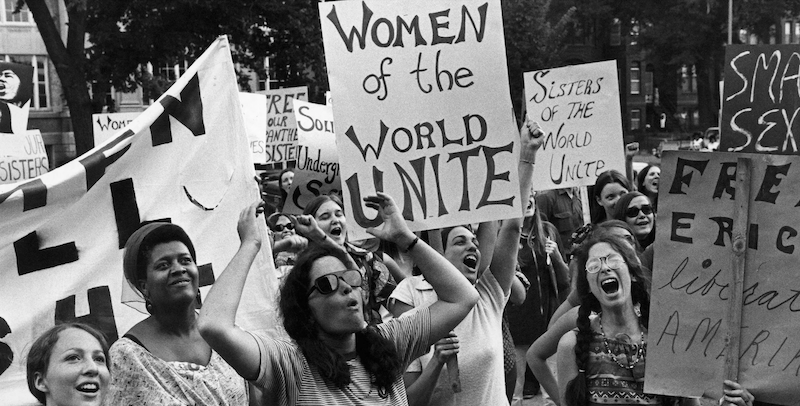
Several factors contributed to the decline of religious affiliation in the 1990s. One reason was the rise of individualism and secularization, as people increasingly sought meaning and identity outside of traditional religious institutions. Another factor was the growing influence of science and technology, which challenged some religious beliefs. Additionally, social and political movements, such as feminism and LGBTQ+ rights, led some to reject organized religion’s conservative views. Finally, scandals within some religious institutions and disillusionment with their teachings also drove people away from religion.
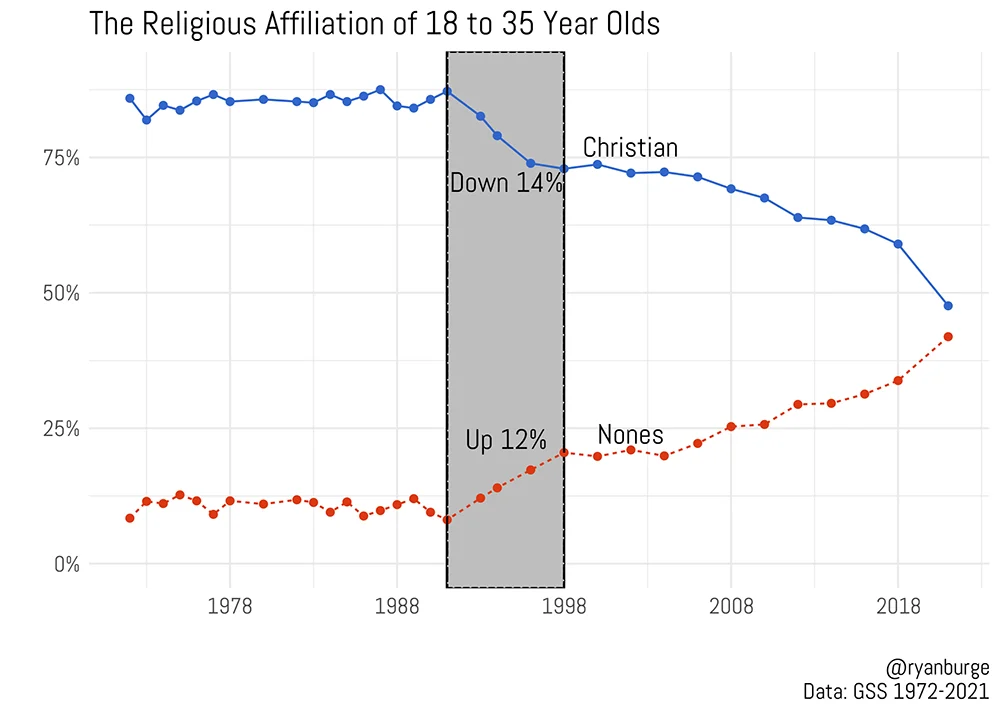
Furthermore, the rise of the religiously unaffiliated increased from just 5% of the population in the early 1970s to about 30% of adults in 2022.

Today, it’s the general trend that liberals have become less religiously oriented.
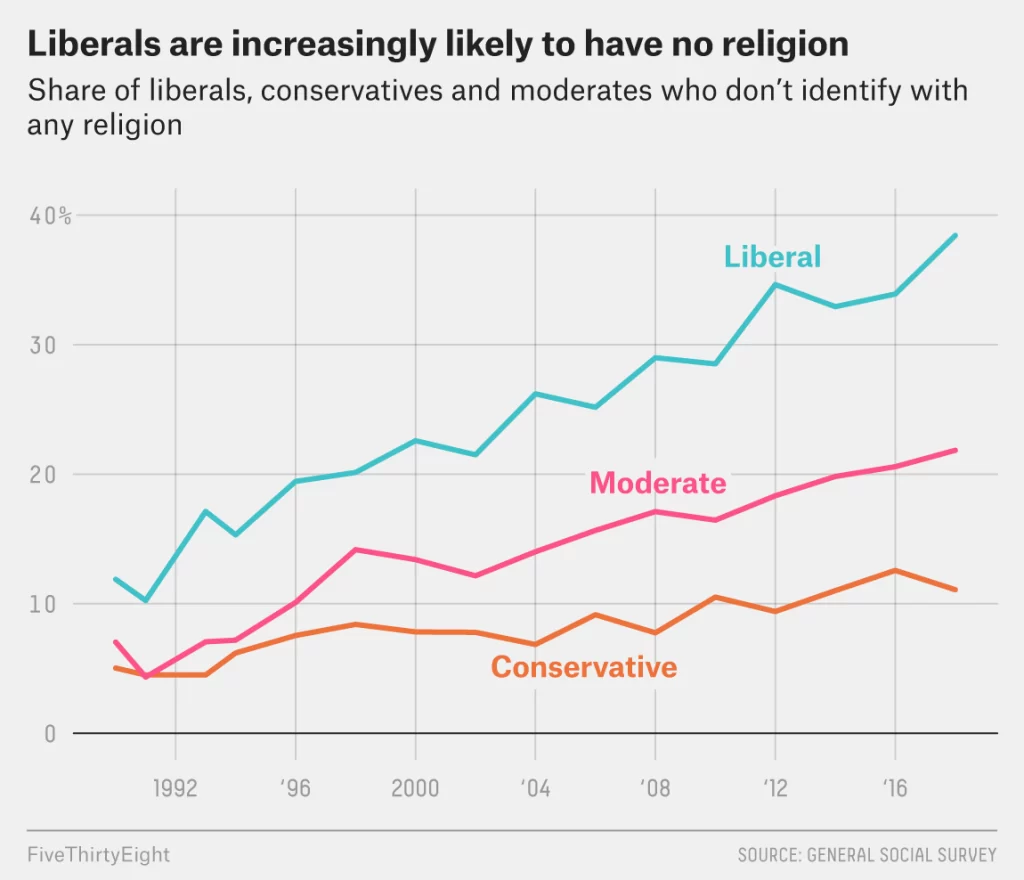
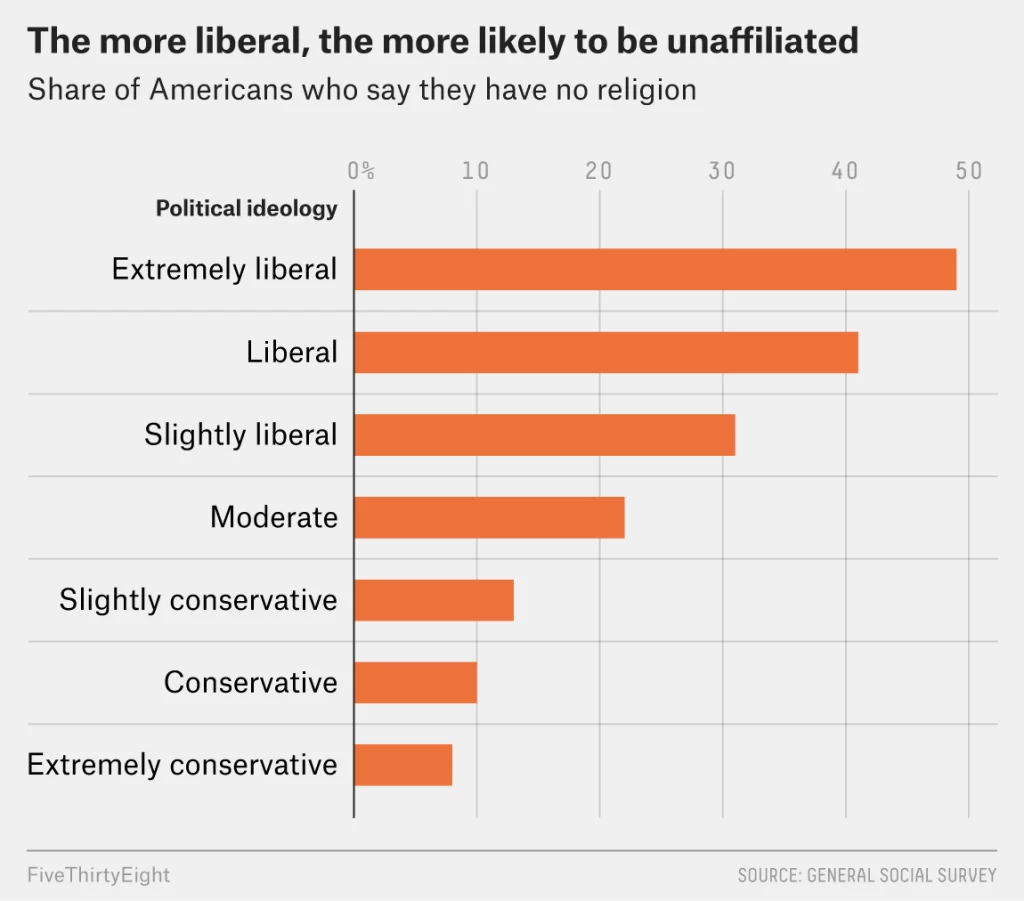
History tends to unfold in messy cycles—actions and reactions, revolutions and counterrevolutions—and even semi-permanent changes are subtle and glacial. But the rise of religious non-affiliation in America looks like one of those rare historical moments that is neither slow, nor subtle, nor cyclical. You might call it exceptional.
Derek Thompson, the atlantic
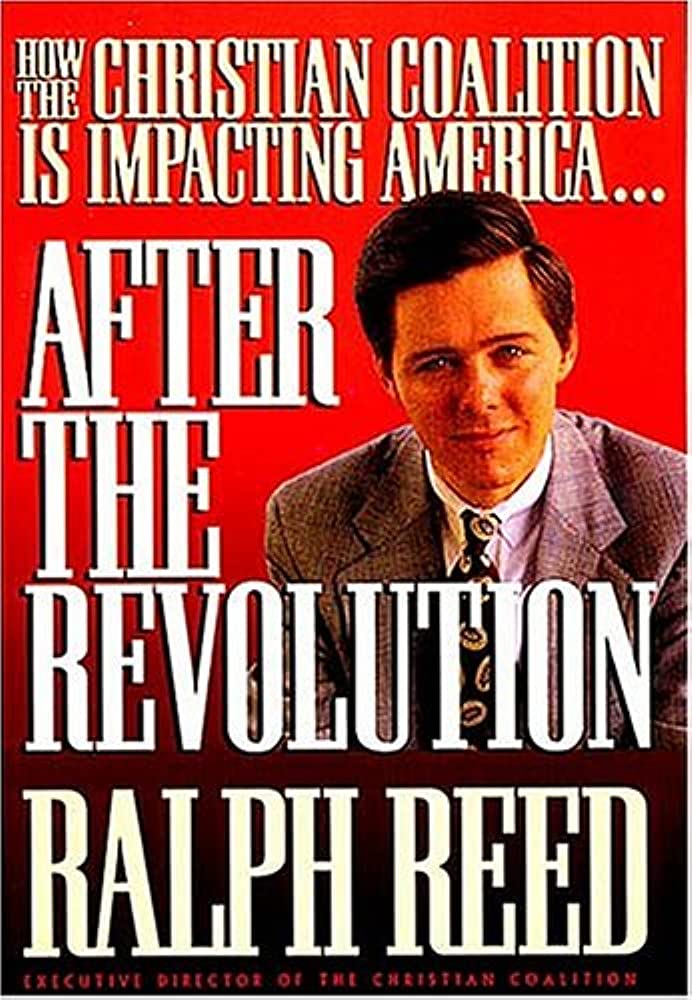
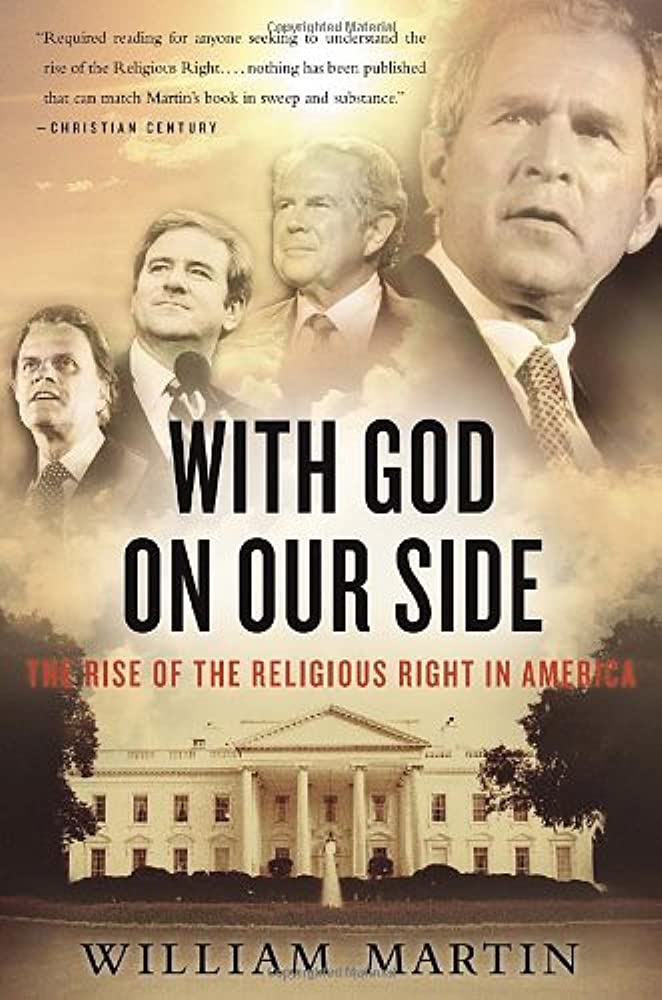
Beginning in the 1970s, conservative Christian leaders such as Jerry Falwell and Pat Robertson formed alliances with Republican politicians, creating what has come to be known as the religious right. This movement has used the language and symbols of Christianity to advance conservative causes such as opposition to abortion and LGBTQ+ rights, as well as supporting conservative economic policies. This has led to a politicization of Christianity in some circles and a blurring of the lines between religion and politics.
Reasons for the Decline in Organized Religion in the 1990s
1. The association of the Republican Party with the Christian right
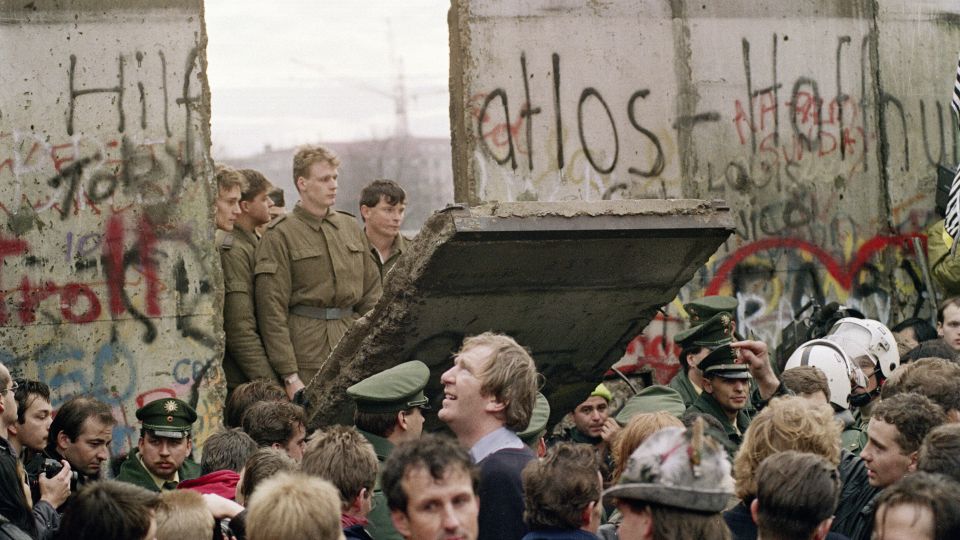
2. The end of the Cold War
Religion has been a unifying force for the political right, bringing together conservatives from different backgrounds under a shared set of values and beliefs. For many on the right, religion is a fundamental aspect of their identity and informs their worldview and political priorities. The use of religious language and imagery has also been a powerful tool for mobilizing conservative voters and creating a sense of community and purpose.